Dioleyl Hydrogen Phosphite CAS and Grade Checks Before Supplier Approval
A buyer can regret approving an additive supplier before confirming whether the quoted material, CAS number, assay basis, and grade documents all describe the same chemical. This risk is especially relevant when purchasing Dioleyl hydrogen phosphite for lubricant formulations, where a naming difference can conceal a different ester profile, a blended product, or an unsuitable application grade.
At the sample-request stage, do not approve a supplier based on a product name alone. Ask for the product identity records first, compare them against your internal raw material specification, and then define the sample tests needed for your formulation. A correct chemical identity check prevents wasted blending work, delayed approvals, and unnecessary reformulation.
Luoyang Fangshan Chemical Co., Ltd. supplies lubricant additives, additive components, and additive packages for global markets. Our stated production capacity for functional chemicals exceeds 10,000 tons, and our management systems include ISO 9001:2015, ISO 45001:2018, and ISO 14001:2015. These facts support a structured document review, but they do not replace the buyer’s own laboratory and formulation approval process.
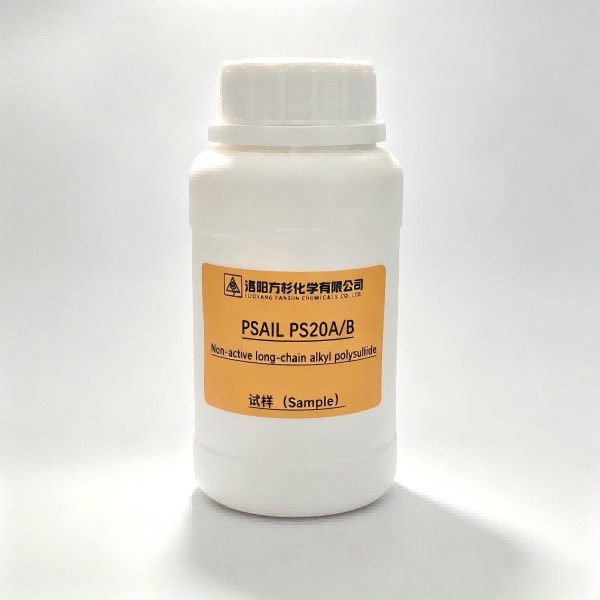
Start supplier prequalification with identity evidence rather than product naming
The clear conclusion is simple: approve the identity first, then assess performance. A commercial name may be useful for ordering, but it is not sufficient evidence for lubricant-use qualification. This approach fits buyers introducing a new source, replacing an imported additive, or qualifying a second supplier. It does not apply when a buyer is only comparing already approved lots from the same controlled source; even then, lot documentation still matters.
For supplier prequalification, request documents that identify the material from several angles. The supplier should be able to connect the sales name, chemical description, CAS reference if applicable, product specification, and batch results without contradiction.
| Document or record | What the buyer should verify | Why it matters | Limit of the document |
|---|---|---|---|
| Technical data sheet | Product name, intended application, physical form, handling guidance, and listed quality indicators | Shows how the supplier defines the commercial grade | A technical data sheet is not batch proof |
| Safety data sheet | Chemical identification section, hazard classification, composition disclosure, and transport information | Helps identify naming variations and safe handling requirements | Composition may be stated as a range or protected information |
| Certificate analysis | Batch number, test values, test methods where provided, release date, and acceptance statement | Connects the supplied lot to the agreed specification | It does not prove performance in your base oil |
| CAS number verification | Whether the CAS number refers to the exact marketed substance, a broad category, or a stated component | Reduces the chance of approving an incorrectly matched substance | A CAS number alone does not define purity or application grade |
| Application statement | Whether the supplier identifies use in lubricant additives or industrial lubricant formulations | Sets the intended-use boundary before formulation trials | It is not a guarantee of suitability in every formula |
Ask the supplier to issue these records under the same product code used on the quotation, proforma invoice, label, and sample container. If the code changes between documents, pause the approval. The supplier should explain the change in writing before the buyer proceeds.
When reviewing additive options, buyers can also compare related phosphite compounds for lubricants to determine whether the intended function requires a phosphite, phosphate ester, or another phosphorus-containing additive type. This comparison is useful when the formulation target has been defined by function rather than by an exact chemical identity. It is not a reason to substitute one chemistry for another without testing.
Use a controlled document sequence before requesting a formulation sample
The recommended process is to request documents before a sample, then use the sample only after the documentary identity is acceptable. This sequence fits technical buyers who need internal approval from procurement, quality, EHS, and formulation teams. It may be shortened for an emergency replacement, but skipping steps increases the risk of an unqualified material entering production.
- Issue an identity request. State the required commercial name, expected chemical description, intended lubricant application, and any internal material code. Ask the supplier to return a technical data sheet, safety data sheet, and recent certificate analysis.
- Match names across all records. Compare the quotation, product label, technical data sheet, safety data sheet, and certificate analysis. Record every variation in spelling, ester description, or grade suffix.
- Check the CAS reference boundary. Confirm whether the listed CAS number represents the supplied material itself, a component, or a broader substance category. Ask for clarification where the relation is not explicit.
- Set the incoming sample criteria. Define which records must accompany the sample, including lot number, manufacturing date if available, and certificate analysis for that lot.
- Run laboratory screening. Test the sample against your internal identity and quality controls before placing a larger order. Use methods suitable for your own approval system.
- Conduct formulation compatibility review. Blend at your intended treatment level and assess the properties that matter in the finished lubricant. Confirm appearance, storage behavior, and the performance tests required by your product standard.
- Approve the grade, not only the supplier. Record the approved product code, document revision, sample lot, target specification, and any limitations on base oil or application.
A technical data sheet should be treated as the starting point, not the final approval. The reasoning is practical: a data sheet describes a grade in general terms, while a batch certificate relates to the actual material shipped. This distinction matters most when production continuity depends on repeatable purchasing. It matters less during an early research screen, although batch data should still be retained once a candidate moves toward approval.
Fangshan Chemical states that samples can be dispatched within 3 days and bulk goods within 7 days, with no minimum order quantity. Buyers should use this flexibility for a staged qualification plan: first request a documented sample, then move to a controlled trial quantity after technical acceptance. These stated dispatch times are planning information, not a substitute for confirming current availability, transport arrangements, or destination-specific requirements at the time of order.
Assess lubricant grade through application fit and formulation compatibility
A material can be chemically identified and still fail lubricant approval. The right conclusion is that identity confirmation and performance qualification are separate decisions. Identity evidence tells you what you received; formulation testing shows whether it works in your specific system. This applies to industrial oils, grease components, and custom additive packages. It does not mean every application needs the same test sequence.
For example, a buyer developing an industrial lubricant may need to assess whether the new additive remains acceptable with the selected base oil, other additives, storage conditions, and target performance tests. A buyer producing a metalworking fluid may face different compatibility questions, particularly where water, emulsification, corrosion control, or process residues are involved.
- For an oil based industrial lubricant: check blend appearance, storage stability, and the finished oil tests specified by your product standard. This fits formulations where the candidate is intended for an oil phase. It does not establish suitability in water based systems.
- For a grease formulation: confirm compatibility with the chosen thickener system and assess the finished grease against the relevant internal test plan. This fits a formulation in which the additive is added during controlled processing. It does not prove that the same dosage will work in a different thickener chemistry.
- For a water based formulation: do not assume an oil soluble additive will disperse or remain stable. Check the supplier’s application statement and perform a controlled compatibility screen. This is relevant for metalworking and aqueous processing systems, but it does not replace corrosion and storage testing.
- For a multi additive package: evaluate the candidate alongside the full package, not as an isolated component only. This fits products with several functional additives. It does not prove that an individual raw material is the cause of a performance result unless controlled comparisons are made.
Buyers seeking package-level support can review lubricant additive package solutions when the requirement is a coordinated blend rather than a single component. For applications with separate antiwear, extreme pressure, or friction control needs, the formulation team should still define the role of each component and validate interactions in the finished product.
Boundary focused FAQ for CAS naming and lubricant grade documents
Is a CAS number enough to approve Dioleyl hydrogen phosphite?
No. A CAS number is an identifier, not a full grade specification. It cannot confirm the current batch quality, impurity profile, physical condition, or fit in a particular lubricant formula. Use the CAS reference as one part of an identity review, together with the product name, chemical description, technical data sheet, safety data sheet, and certificate analysis.
Why can supplier names differ when the material appears similar?
Supplier names may differ because one document uses a chemical description, another uses a commercial grade name, and another uses a translated or shortened naming convention. The correct action is not to assume equivalence. Ask the supplier to state clearly whether each name refers to the same marketed grade and whether the associated CAS reference applies to that grade. This request is appropriate whenever naming varies. It is unnecessary only when every controlled document already uses identical wording and product codes.
Can a buyer accept a broad chemical family description?
Only for an early sourcing discussion, not for final raw material approval. A broad family description may help identify possible candidates, but it leaves too much uncertainty for incoming quality control. Before approval, request a grade-specific document set and define the acceptance criteria that your receiving team can check. A broad description may remain acceptable for a research-only sample if the sample is clearly segregated from production materials.
Which documents are needed for lubricant additive qualification?
At minimum, request a current technical data sheet, safety data sheet, and batch-linked certificate analysis. Also request a written application statement identifying the intended lubricant-use scope and a clarification of CAS and naming variations where they exist. Depending on your internal system, you may additionally require sample labeling details, quality agreements, restricted-substance declarations, or test methods. Those additional records are buyer-specific and cannot be assumed from a standard document pack.
Does ISO certification replace incoming qualification testing?
No. ISO 9001:2015 supports a defined quality management system, while ISO 45001:2018 and ISO 14001:2015 address occupational health and safety and environmental management systems. They are meaningful supplier assessment inputs, but they do not certify that a particular batch will meet your formula requirements. Continue to use your own incoming checks and formulation trials.
What should trigger a hold before placing a larger order?
Place the purchase on hold if the product code differs among documents, the supplier cannot explain a CAS or naming variation, the sample has no batch-linked certificate analysis, or the stated application does not match your intended use. A hold is also appropriate where a new sample shows unexpected blend behavior. These controls fit pre-qualification work. They should not be treated as proof that the product is unsuitable; they indicate that the evidence is incomplete.
Prevent common approval errors during sample evaluation
The most effective preventive measure is to make procurement and formulation teams use the same approval record. Buyers often lose time because commercial records and laboratory records are stored separately, leaving no clear link between a tested sample and a later production order.
- Approving by name alone: Avoid this because commercial names can vary. Require the same product code and identity documents on each record.
- Using an old certificate analysis: Avoid accepting a historical result as evidence for a new sample. Request the certificate analysis linked to the actual sample lot.
- Ignoring document revision dates: A changed technical data sheet can indicate a changed grade description or updated handling information. Record the revision used during approval.
- Testing only the neat additive: A neat-material check does not show performance in the finished lubricant. Include a controlled blend trial where formulation approval is required.
- Assuming one formulation result transfers everywhere: A result in one base oil or package does not establish suitability in another. Define the formula boundary in the approval record.
- Ordering before sample labels are reconciled: The sample label, quotation, and batch documents should match. If they do not, resolve the discrepancy before scaling up.
For buyers comparing single components with broader additive systems, lubricant additive components can help frame the sourcing discussion around individual functions. Where friction behavior is a separate requirement, organic molybdenum friction modifiers should be evaluated independently rather than assumed to be interchangeable with a phosphorus-containing component.
Build an approval record that procurement can use repeatedly
The best final output of pre-qualification is a controlled approval record, not an informal email saying that a sample looked acceptable. The record should tell procurement exactly what can be purchased, which documents must accompany it, and when technical reapproval is required. This method fits companies seeking reliable import substitution or second-source qualification. It may be more detailed than needed for a one-time laboratory purchase, but it is appropriate before routine production buying.
| Approval record field | Required entry | Purpose |
|---|---|---|
| Approved product identity | Commercial grade name, chemical description, and supplier product code | Prevents ordering by an incomplete name |
| CAS reference status | Recorded CAS number and written explanation of any naming variation | Creates an auditable identity boundary |
| Required documents | Technical data sheet, safety data sheet, certificate analysis, and application statement | Gives procurement a repeatable release checklist |
| Sample reference | Sample lot and the related laboratory report | Links formulation results to the evaluated material |
| Formula boundary | Approved base oil, package context, intended application, and dosage range if internally defined | Stops untested transfer into another product |
| Reapproval triggers | Product code change, document revision, material change notice, or unexpected incoming result | Defines when the existing approval no longer applies |
Daniel Zhang, Sales Engineer for global market development, supports discussions on custom additive packages and formulation compatibility assessment. For a new supplier review, the most useful request is a clear document list, the intended application, and the internal tests that will decide approval.
Request a documented sample and specification pack for your lubricant qualification review.
 WhatsApp
 Email
 +8616638861155