How to Source Dioleyl Hydrogen Phosphite Without Costly Errors
Ordering the wrong chemical grade or synonym of an additive can halt production, compromise your formulation, and lead to costly returns. When sourcing a specialized component like Dioleyl hydrogen phosphite, precision is not just a goal; it's a requirement. A simple mistake on a purchase order, rooted in a misunderstanding of a technical data sheet, can have significant operational consequences. This guide provides a clear, actionable framework for procurement managers and formulators to ensure they receive the exact product they need, every time.
My name is Eric Lee, and as a Sales Engineer at Luoyang Fangshan Chemical, I frequently help clients navigate the complexities of sourcing lubricant additives. I've seen firsthand how a disciplined verification process before issuing an RFQ prevents delays and ensures performance. Our approach is built on clarity and technical validation, supported by a production capacity exceeding 10,000 tons and an R&D team of over 30 specialists. Let's walk through the steps to secure the right material for your application.
Pre-RFQ Verification: A 4-Step Checklist to Prevent Sourcing Failures
Before you even contact a potential lubricant additive supplier, a rigorous internal check is the most effective way to prevent errors. Many sourcing issues originate from incomplete or ambiguous specifications. The following steps will help you build a precise request that leaves no room for interpretation. This is the single most important action to take before engaging with suppliers.| Verification Point | Why It Is Essential (The Risk of Skipping) | Action Required |
|---|---|---|
| CAS Number | This is the universal identifier for a chemical substance. Different products can share similar names or trade names, but the CAS Registry Number is unique. Sourcing by name alone is a common cause of receiving the wrong isomer or a related but functionally different compound. | Confirm the exact CAS number for Dioleyl hydrogen phosphite required for your formulation. For example, the common CAS is 36103-33-8. State this number explicitly on all documentation. |
| Chemical Synonyms | This additive is known by several names, including Phosphorous acid, dioleyl ester. A supplier might list the product under a different synonym. If you only search for one name, you may miss qualified suppliers or, worse, order a different product that shares a partial name. | List the primary name and at least one key synonym in your RFQ. This broadens your search while ensuring clarity. Ask suppliers to confirm their product matches the specified chemical identity. |
| Assay / Purity | The concentration of the active chemical determines its performance. A lower-purity product might be cheaper per kilogram but will require a higher treat rate, potentially increasing overall cost and introducing unwanted impurities into your final lubricant. | Define your minimum acceptable assay percentage. For high-performance applications, this is non-negotiable. Request a Certificate of Analysis (CoA) from a recent batch to verify the supplier's typical production quality. |
| Product Form | Is the product a clear liquid, a viscous fluid, or a solid? Does your production process require a specific viscosity or physical state for proper handling and blending? Receiving a product in an unexpected form can render it unusable in your existing equipment. | Specify the required physical state (e.g., "light yellow transparent liquid") and any viscosity parameters. This prevents logistical surprises and ensures compatibility with your manufacturing process. |
Evaluating Technical Performance Beyond the Spec Sheet
A Certificate of Analysis tells you what a product *is*. Performance testing tells you what it *does*. For an anti-wear and extreme pressure additive, several key performance indicators reveal its true value in a formulation. When you receive a sample, these are the metrics your lab should focus on to validate its effectiveness.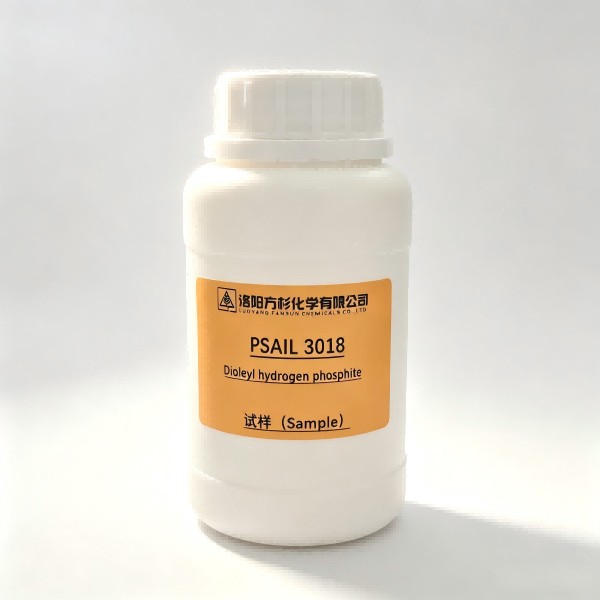 Here are common performance challenges and the tests that measure them:
- High Friction Coefficient: If your goal is friction reduction, a standard SRV test is essential. This test measures the coefficient of friction and wear under oscillating motion, directly simulating conditions in many industrial applications. A lower, stable friction coefficient indicates superior performance.
- Poor Extreme Pressure (EP) Effect: The Four-Ball Machine test is the industry standard for evaluating EP properties. Key metrics to demand from a supplier's technical data sheet (TDS) are the Maximum Non-Seizure Load (PB) and the Weld Point (PD). Inadequate PB/PD values mean the additive will fail to protect equipment under high-load conditions.
- Excessive Wear (Large Wear Scar): Following the Four-Ball test, measuring the wear scar diameter (WSD) on the test balls provides a direct indication of the additive's anti-wear capability. A smaller wear scar is always better. Compare the sample's performance against your current additive or your target benchmark.
- Insufficient Oxidation Stability: The Rotary Pressure Vessel Oxidation Test (RPVOT) can assess how the additive affects the oxidative life of the base oil. A good additive should not significantly degrade the oil's resistance to oxidation.
Key Criteria for Selecting a Reliable Additive Supplier
After verifying the technical specifications, the next step is to evaluate the supplier. A long-term partnership depends on more than just price. It requires reliability, technical support, and logistical flexibility. As a professional lubricant additive manufacturer, we've built our operations around these principles. Here is a decision checklist for vetting potential partners:Common Mistakes in Supplier Selection for Lubricant Additives
- Mistake 1: Focusing Solely on Price Per Kilogram. A cheaper product with lower purity or inconsistent quality can lead to higher treat rates, batch failures, and equipment damage, erasing any initial savings. Always calculate the cost-in-use, not just the purchase price.
- Mistake 2: Overlooking Quality Management Systems. A supplier without verifiable certifications like ISO 9001 (Quality), ISO 14001 (Environmental), and ISO 45001 (Health & Safety) may lack the process controls needed for consistent production. Our facilities are certified across all three standards, ensuring reliable and responsible manufacturing.
- Mistake 3: Accepting Long Lead Times and High MOQs. Inflexible supply chains can hurt your ability to manage inventory and respond to customer demand. We offer a "no MOQ" policy and can ship bulk orders in as little as seven days, providing the agility modern businesses need.
- Mistake 4: Underestimating the Value of Technical Support. When you face a formulation challenge, can your supplier offer expert advice? Our R&D team includes over 30 PhD and Master's degree holders who can assist with everything from product selection to developing high-performance lubricant additive packages & blending solutions.
- Mistake 5: Ignoring the Return Policy. Even with the best processes, issues can arise. A transparent and fair return policy is a sign of a confident supplier. We believe in our product quality and offer a clear process for协商退货 (negotiated returns) if any quality issues are confirmed.
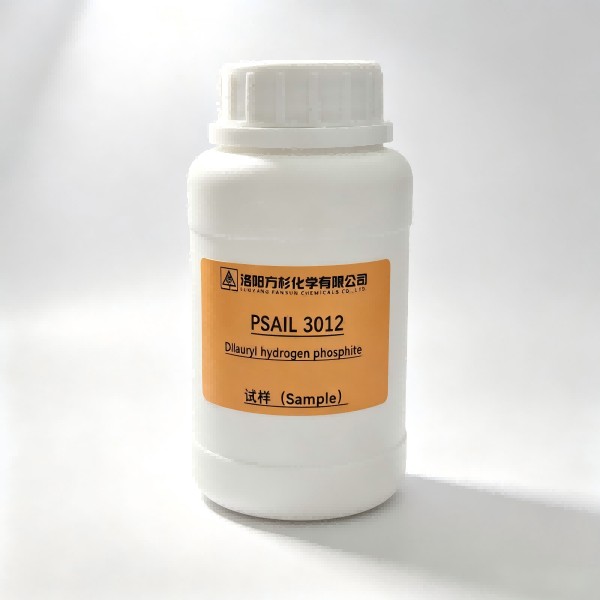
Integrating Phosphite Esters into Your Formulations
Dioleyl hydrogen phosphite is a versatile anti-wear and friction-reducing agent, often used as an import-substitute additive. It functions well in a variety of base oils and is typically part of a larger formulation. Its primary role is to form a protective phosphide layer on metal surfaces under boundary lubrication conditions, preventing direct metal-to-metal contact. When formulating, consider its synergy with other components. For instance:- In Industrial Gear Oils: It is often used alongside sulfur-based EP additives. The phosphite provides anti-wear protection, while sulfur carriers handle the extreme pressures. Explore our explore fanschems oil-soluble sulfur-based ep/aw additives, including sulfurized olefins and fats for compatible options.
- In Hydraulic Oils: It contributes to anti-wear performance and can improve thermal stability. It must be compatible with other additives like rust inhibitors and demulsifiers.
- In Greases: It can enhance the load-carrying capacity and reduce friction, working in tandem with the grease's thickener system.
If you need a technical data sheet, a sample for testing, or consultation on finding an import substitution for your current additives, please contact us. Our engineering team is ready to assist with your specific formulation requirements.
 WhatsApp
 Email
 +8616638861155